



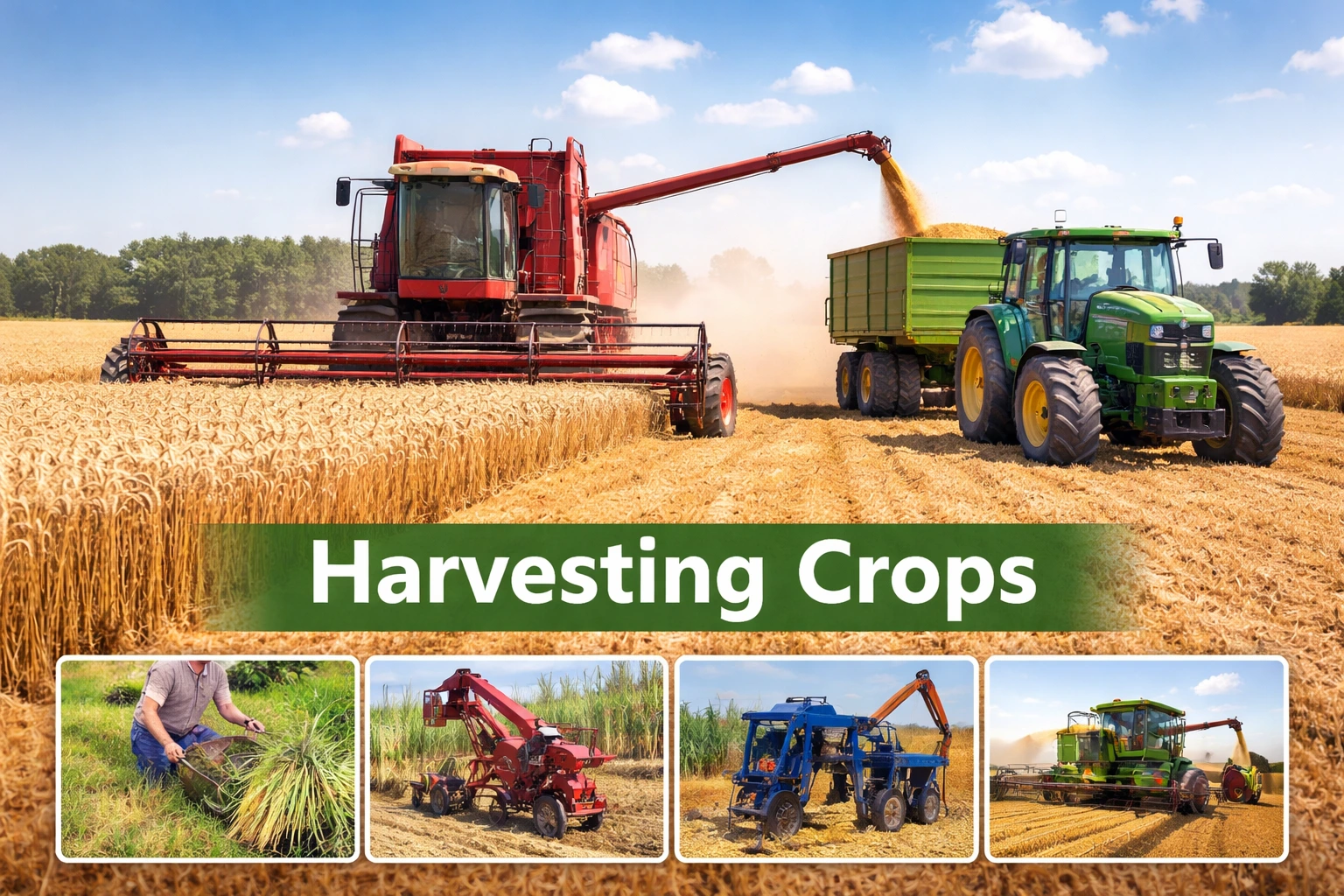
Harvesting is one of the most critical stages in the agricultural cycle. The method chosen for harvesting directly impacts crop quality, yield efficiency, labor cost, and overall profitability. With advancements in farm technology, farmers today have access to a wide range of harvesting techniques—from traditional manual practices to fully mechanized systems developed by leading Agricultural Machinery Manufacturers.
In this blog, we explore the top 7 crop harvesting methods, their advantages, and how modern machinery has transformed the harvesting process for small, medium, and large-scale farms.
1. Manual Harvesting (Hand Tools)
Manual harvesting is one of the oldest and most widely practiced methods, especially in small farms and developing regions. Crops are harvested using hand tools such as sickles, knives, or scythes.
Key Features:
-
Requires skilled labor
-
Suitable for delicate crops like vegetables, fruits, and flowers
-
Minimal machinery investment
Limitations:
-
Time-consuming and labor-intensive
-
Higher dependency on workforce availability
-
Lower efficiency for large-scale farming
Despite its limitations, manual harvesting is still preferred where precision and crop care are critical.
2. Animal-Powered Harvesting
In some rural and semi-mechanized regions, animals like bullocks or horses are used to assist harvesting operations. Simple implements are attached to animals to cut or pull crops.
Key Features:
-
Cost-effective for small farmers
-
Environment-friendly
-
Low fuel dependency
Limitations:
-
Limited speed and productivity
-
Not suitable for large fields
-
Requires animal maintenance
This method serves as a transitional stage between manual and mechanized harvesting.
3. Mechanical Harvesting Using Reapers
Mechanical reapers are widely used for harvesting cereal crops such as wheat, rice, barley, and oats. These machines cut crops close to the ground and lay them in windrows for further processing.
Benefits:
-
Faster harvesting compared to manual methods
-
Reduces labor dependency
-
Improves harvesting uniformity
Ideal For:
-
Medium-sized farms
-
Regions facing labor shortages
Reapers are a popular choice due to their affordability and efficiency.
4. Combine Harvesting
Combine harvesters are advanced machines that perform cutting, threshing, and cleaning in a single operation. This method is commonly used for grains like wheat, maize, soybean, and paddy.
Advantages:
-
High-speed harvesting
-
Significant labor cost reduction
-
Minimizes grain loss
-
Consistent output quality
Considerations:
-
High initial investment
-
Requires skilled operators
This method showcases the technological innovation brought forward by modern Agricultural Machinery Manufacturers to improve farm productivity.
5. Threshing-Based Harvesting
In this method, crops are first cut manually or mechanically and then transported to threshing machines. The threshers separate grains from stalks efficiently.
Benefits:
-
Better grain separation
-
Reduces post-harvest losses
-
Suitable for cereals and pulses
Common Equipment:
-
Power threshers
-
Straw walkers
-
Grain separators
This approach is widely used in regions where combine harvesters are not economically feasible.
6. Crop-Specific Harvesting Machines
Certain crops require specialized harvesting equipment to prevent damage and maintain quality. Examples include sugarcane harvesters, cotton pickers, potato diggers, and maize harvesters.
Why Specialized Machines Matter:
-
Protect crop integrity
-
Improve harvesting speed
-
Reduce wastage
Manufacturers like L.K. Agro Engg. Works focus on producing durable and crop-specific components that support efficient harvesting operations in demanding field conditions.
7. Smart & Precision Harvesting (Modern Technology)
With the rise of precision agriculture, harvesting has entered a new era. GPS-enabled machines, sensor-based monitoring, and automation are now integrated into harvesting systems.
Key Innovations:
-
Yield mapping
-
Automated steering
-
Real-time crop analysis
-
Reduced fuel and time consumption
Benefits:
-
Data-driven harvesting decisions
-
Higher accuracy
-
Optimized resource utilization
This method is gaining popularity among large-scale commercial farms aiming for sustainability and maximum output.
Choosing the Right Harvesting Method
Selecting the best harvesting method depends on multiple factors:
-
Type of crop
-
Farm size
-
Labor availability
-
Budget
-
Soil and climatic conditions
While traditional methods still hold value in certain contexts, mechanized and smart harvesting techniques are increasingly becoming essential for competitive and sustainable farming.
Conclusion
Harvesting methods have evolved significantly over time, driven by technological innovation and the need for higher efficiency. From manual harvesting to advanced combine and precision-based systems, each method plays a vital role in modern agriculture. The continuous efforts of Agricultural Machinery Manufacturers have made harvesting faster, more reliable, and economically viable for farmers across different regions.
By understanding and adopting the right harvesting technique, farmers can improve productivity, reduce losses, and ensure better returns from every crop cycle.